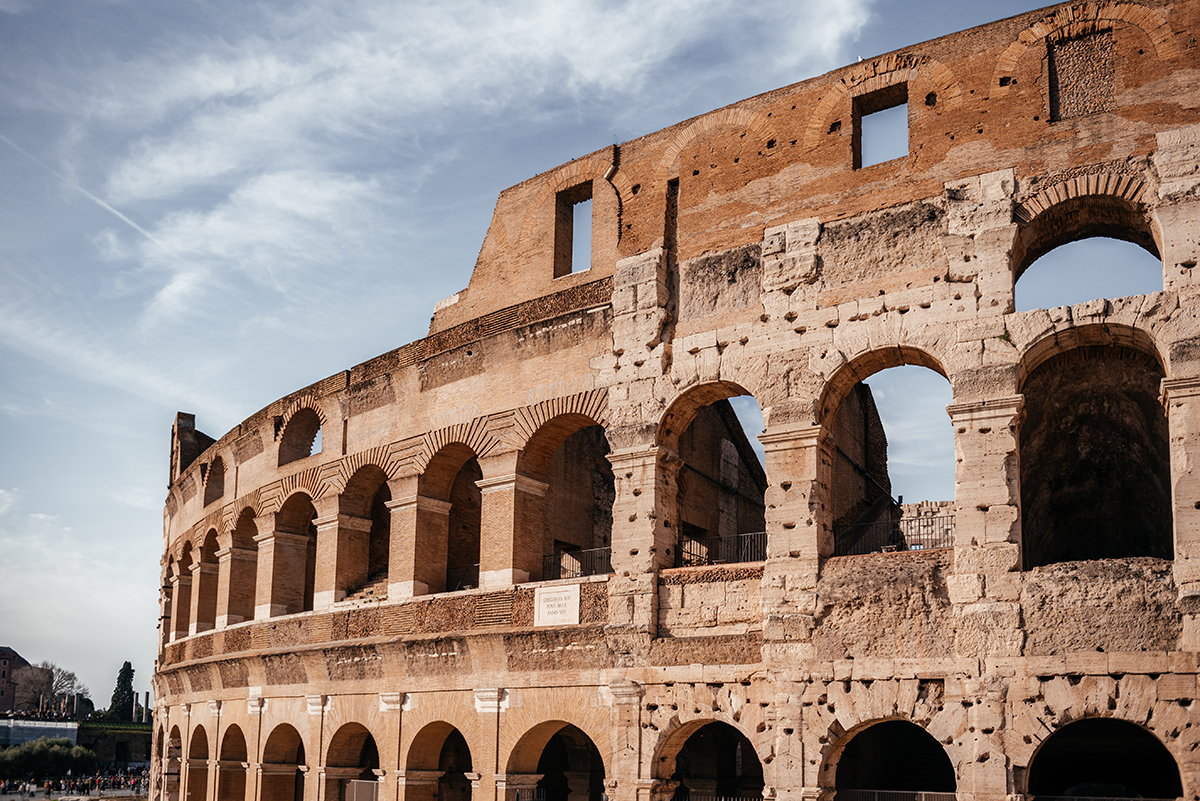
For most first-time visitors with limited Rome time, the Arena Floor tour delivers about 80% of the experiential impact of the Underground at roughly two-thirds of the cost and a fraction of the booking difficulty. The Underground (hypogeum) tour is worth the premium for travellers who care specifically about Roman engineering and gladiatorial logistics, are visiting Rome for a second time, or have older children genuinely engaged by archaeology.
Both tours are excellent. Neither is wrong. But they are not interchangeable, and the marketing language used by booking sites tends to blur the differences in ways that lead to buyer's remorse on either side. This guide is the structured, side-by-side decision framework.
The short answer
- Pick Arena Floor (€24 official; guided tour ~€55–90) if you have one Rome visit, want the iconic perspective, are travelling with younger children or anyone with mobility limitations, or value booking flexibility. Standing on the reconstructed wooden floor at the centre of the amphitheatre is the single most cinematic Colosseum moment available to the public.
- Pick Underground & Arena (€24 official; guided tour ~€90–250) if you have specific interest in Roman engineering, the operational backstage of gladiatorial games, or have already visited the Colosseum before. The hypogeum delivers a fundamentally different perspective that the arena floor cannot replicate — and you also get the arena floor as part of the same ticket.
- Skip both if you have under three hours total at the Colosseum, are budget-constrained, or don't have strong interest in either gladiatorial spectacle or Roman engineering. The Standard 24h ticket (€18 official; skip-the-line via GYG ~€25–35) is genuinely sufficient for a strong first visit.
Quick decision — Arena or Underground
Best for most
Arena Floor
~€55–€90
- Iconic gladiator's-eye view
- Easier to book (1–4 weeks ahead)
- Suitable for kids 6+, mobility-friendlier
For depth
Underground & Arena
~€90–€250
- Hypogeum + arena floor + Forum/Palatine
- Most comprehensive ticket sold
- Sells out within minutes of the 30-day release
The full comparison at a glance
| Arena Floor (Full Experience Arena) | Underground & Arena (Full Experience Underground) | |
|---|---|---|
| Official price (2026, adult) | €24 + ~€2 fee | €24 + ~€2 fee |
| Realistic third-party price | €55–€90 See guide → | €90–€250 Book → |
| What's unique to this ticket | Standing on the reconstructed gladiatorial floor | Walking the corridors below the arena, seeing the lift system in person |
| What you also get | Hypogeum view from above; Forum + Palatine Hill | Same arena floor; hypogeum walkway; Forum + Palatine Hill |
| Time on the unique area | ~30 min on the floor itself | ~40–45 min total for hypogeum + arena floor (55–60 min on the €32 educator-led version) |
| Total Colosseum time | 90 min (regulatory cap) | 90 min (regulatory cap) |
| Guide required? | Yes (mandatory) | Yes (mandatory) |
| Physical demand | Low — flat surfaces, minimal stairs | Moderate — descent, stairs, narrow passages, uneven floor |
| Photo conditions | Excellent (open, well-lit, full panorama) | Tighter framing, lower light, no flash |
| Suitable for kids 6–8? | Yes | Borderline — best for 9+ |
| Suitable for mobility limitations? | Limited — flat floor but stairs to access | No — not wheelchair-accessible |
| Suitable for claustrophobia? | Yes | Often no |
| Booking difficulty (April–Oct) | Hard | Very hard |
| Sells out within | Hours to days at 30-day release | 60–120 seconds at 30-day release |
| Most common reaction | Spectacular, cinematic, iconic | Profound, atmospheric, intellectually rich |
What is the Colosseum Arena Floor?
The arena is the elliptical performance space at the centre of the Colosseum. The name comes from the Latin harena, meaning sand — the original wooden floor was covered in a deep layer of it to absorb the blood and waste of gladiatorial combat. The arena measures 83 metres long by 48 metres wide and at its centre you stand surrounded by tiered seating that rises to 48 metres directly above you.
The original wooden flooring rotted away centuries after the games ended, exposing the hypogeum below. In 2010 a partial reconstruction was installed over the eastern third of the arena — modern wooden decking laid approximately six metres above the original underground level. This reconstructed section is what arena floor tours stand on today.
- You enter through the Gladiator's Gate. Most arena floor tours enter via the Porta Libitinensis, the western gate historically named for the Roman goddess of funerals — the route through which dead gladiators were carried out. Some tours use the Porta Sanavivaria, the eastern Gate of Life.
- The view is what makes the tour. From floor level, the seating tiers rise around you on all sides. The acoustics, the scale, and the visual line up to the upper levels register in a way they cannot from the spectator galleries.
- You can see the hypogeum from above. Through gaps in the reconstructed wooden decking, you look directly down into the underground — original ancient stone passages visible just metres beneath your feet. An arena floor ticket gives you a real visual sense of the underground even though you don't walk through it.
- You spend roughly 30 minutes on the floor itself as part of a wider 3-hour tour that also covers the upper Colosseum levels and the Roman Forum and Palatine Hill.
- The capacity cap on the floor is roughly 50 visitors at a time — meaning the area is busy but not chaotic, with enough space for unobstructed photography.
What is the Colosseum Underground (hypogeum)?
The hypogeum is the two-level subterranean network of corridors, animal cages, ramps, and lift mechanisms that sat beneath the arena floor. Built around AD 90 by Emperor Domitian and accessible today via a 160-metre wooden walkway installed during the 2018–2021 restoration.
- Descent into the central corridor. The walkway begins with a stairway down into the fossa bestiaria — the central holding area for animal cages. From here you can see the surviving brick partitions, capstan sockets in the floor, and original drainage channels.
- Walking past the lift positions. Several points on the walkway pass directly over identifiable lift shafts, with the original capstan recesses and vertical guide grooves still readable in the brickwork.
- Identification of the Gate of Life and Gate of Death. Both arches are visible from the hypogeum walkway, with the Sanitarium (gladiator infirmary) and Spoliarium (where the dead were stripped) marked on the route.
- Then up onto the arena floor. Every underground tour also includes arena floor access — the hypogeum ticket is genuinely a superset of the arena floor ticket.
- Timing. The guided hypogeum-and-arena segment runs approximately 40–45 minutes on the standard €24 ticket (55–60 minutes on the €32 version with an included PArCo educator). The often-repeated "25 minutes" figure usually refers to a different, separate product — the Passage of Commodus add-on — not the standard underground route. Total permitted time inside the Colosseum on a Full Experience ticket is 90 minutes; note that the Attic/upper-tier lift is sold as its own separate Full Experience Attic ticket and is not included here.
What can you see from each?
| You see this from the Arena Floor | You see this from Underground |
|---|---|
| The full sweep of seating tiers from a gladiator's perspective | The capstan recesses and lift shaft positions |
| The 360-degree panorama of the cavea rising overhead | The original brick partition walls of the holding cells |
| The full elliptical scale of the playing area | The drainage channels and floor sockets |
| The hypogeum from above (through gaps in the decking) | The Sanitarium and Spoliarium areas |
| Cinematic photography of the amphitheatre interior | The Ludus Magnus connecting tunnel entry |
| The view from the Emperor's box level | The replica lift built in 2015 (when on display) |
This is why the Underground & Arena ticket is the more comprehensive experience — it includes everything the arena floor ticket does, plus the additional underground perspective. The trade-off is purely difficulty of booking and price.
Ready to book the underground tour?
Reserve your spot before it sells out
Underground capacity is limited. Book through GetYourGuide for instant confirmation and free cancellation.
Typically €90–€250 depending on group size, date, and tour length.
Check AvailabilityWho should pick the Arena Floor?
The Arena Floor tour is the right choice for the majority of visitors. Specifically:
- This is your first or only Rome trip and you want the iconic Colosseum experience without optimising for any specific sub-interest.
- You are travelling with children aged 6–8 who would find a 45-minute underground walk through narrow corridors challenging.
- You or anyone in your group has claustrophobia or significant mobility limitations — the arena floor is on a single open level with minimal stairs.
- Your priority is photography and visual impact — the floor delivers the most photogenic Colosseum perspective and operates in better light.
- You want to book within a normal travel-planning window (1–4 weeks ahead) without engineering your itinerary around the 30-day ticket release.
- Your budget is constrained but you still want the upgrade beyond the standard ticket — the realistic third-party price gap is roughly €35–€160 in favour of the arena floor.
For a full breakdown of the arena floor experience, see our dedicated Colosseum Arena Floor Tour guide.
Who should pick the Underground & Arena?
The Underground tour rewards a specific kind of traveller. Specifically:
- You have specific interest in Roman engineering, military logistics, or gladiatorial spectacle — the hypogeum is the working machinery of the games.
- You are visiting Rome for a second or third time and have already seen the standard Colosseum perspective.
- You are travelling with older children or teenagers (10+) who are engaged by archaeology, and adults with strong history interests.
- You value rarity — the underground walks an area that was buried for nearly 2,000 years and was only fully reopened to the public in June 2021.
- You have a flexible enough itinerary to book exactly 30 days ahead of your Colosseum date — or, if you miss that window, to check the six specific daily Underground & Arena shifts that re-release just 7 days before the visit date. Failing both, you're willing to pay a third-party premium of roughly €90–€230 for a guaranteed slot.
- You have at least four hours to spend at the Colosseum and Forum, allowing time for the full underground walkway plus the standard route.
Should you book the combined Full Experience Underground & Arena?
Strictly on content, the Underground & Arena ticket is the most complete option — it gives you the arena floor and the hypogeum, plus the Roman Forum and Palatine Hill, all on the same €24 official ticket. It is genuinely the best ticket the Parco Archeologico sells.
The catch is that it is also the hardest ticket in Rome to obtain. During April through October, the official site's allocation typically sells out within 60 to 120 seconds of the 30-day release window opening. Travellers who plan trips with less than a month's runway almost never secure it through the official channel and must buy through third-party operators at a markup of roughly €65–€225. One underused workaround: six specific daily Underground & Arena shifts (around 12:30, 13:45, 15:50, 16:20, 16:50 and 17:20) re-release online just 7 days before the visit date for anyone who missed the 30-day window.
For travellers who can plan exactly 30 days ahead and treat the booking as a non-negotiable calendar event: the combined ticket is the right choice almost without exception. For everyone else, the realistic decision is between the Arena Floor (achievable) and the Underground (a coin-toss against availability).
What about the Evening Underground Tour?
The Parco also runs "A Night at the Colosseum," an official evening guided visit on Tuesdays and Thursdays, 8–11pm, priced at €50 (a €24 ticket plus a €26 guided-tour fee).
- The evening tour does not include daytime entry to the Roman Forum and Palatine Hill unless your slot starts before 6 PM.
- It is shorter than the daytime tour, typically 75–90 minutes inside the monument with no upper-level standalone exploration time.
- The atmosphere is genuinely different — fewer crowds, dramatic lighting, cooler summer temperatures.
- It is best treated as a supplementary visit, not a substitute. If your trip allows only one Colosseum visit, the daytime Full Experience is the better choice.
How does booking difficulty actually compare?
| Booking phase | Arena Floor (Full Experience Arena) | Underground & Arena |
|---|---|---|
| 30-day window opens | Held for hours to days in peak season | Sold out in 60–120 seconds in peak season |
| 7–14 days before visit | Usually still available officially | Almost never available officially |
| 1–6 days before visit | Limited official availability; widely available via third parties | Third-party operators only |
| Same-day | Walk-up unlikely; some third-party slots | Effectively zero |
Is this tour suitable for kids?
| Arena Floor | Underground | |
|---|---|---|
| Recommended minimum age | 6 | 8–9 (operator-dependent) |
| Stroller policy | Restricted; must be folded/checked at security | Not allowed underground |
| Walking distance | ~1 km total tour | ~1.5–2 km total tour |
| Stairs | Some | Significant |
| Engagement factor | High — open, dramatic visual scale | High but requires interest in machinery/history |
| Boredom risk | Low | Moderate (45 min underground is talk-heavy) |
| Heat/air comfort | Good (open air) | Hot in summer (poor ventilation) |
For families with mixed ages, the arena floor is generally the safer choice. Underground tours work well for families where the children are specifically engaged by Roman history, but a 6-year-old in a 45-minute hypogeum corridor with dense narration is a setup for difficulty.
Photography: which tour gives better photos?
The arena floor wins this comparison clearly.
On the arena floor
- Full 360-degree panoramas of the amphitheatre interior
- Strong natural light, or the gold-hour wash on upper tiers in late afternoon
- Open framing space — no narrow corridors
- The Emperor's box and upper levels visible in the same frame
- Standing-room composition without crowds blocking sightlines
In the hypogeum
- Lower light requiring higher ISO or wider apertures
- Narrow, horizontally-constrained framing
- No flash permitted (a strict rule)
- Tripods and selfie sticks prohibited
- Some atmospheric advantage — brickwork and grooves photograph well in moody light if you're a competent low-light shooter
For most travellers using a phone camera, the arena floor will produce dramatically more usable images. For travellers comfortable with manual settings in low light, the hypogeum has its own visual rewards but is technically harder.
Are there situations where neither ticket is right?
Yes — and the booking marketing rarely says this clearly.
The Standard 24h ticket (€18) is genuinely sufficient if:
- This is a casual stop on a multi-city European trip and you want to see the Colosseum without optimising the experience.
- You have 90 minutes total to dedicate to the monument.
- Your travel companions are not strongly interested in archaeology and you don't want to drag them through a 3-hour guided tour.
- Your primary interest is the exterior — which you can fully appreciate from the surrounding piazzas without entering at all.
The standard ticket includes timed entry to the Colosseum's first and second tiers, the on-site Colosseum Museum, and access to the Roman Forum, Palatine Hill, and Imperial Fora. It is paired with the free MyColosseum audio guide app. The only things it does not include are the arena floor, the underground, and the attic level.
Frequently asked questions
Is the underground tour worth the extra cost over the arena floor?
For most visitors with one Rome trip and limited time, no — the arena floor delivers the bulk of the experiential value at lower cost and lower booking difficulty. For visitors with specific interest in Roman engineering, returning visitors, or those who can plan exactly 30 days ahead: yes.
Can I see the underground from the arena floor?
Yes. Through gaps in the reconstructed wooden decking, you can look directly down into the original ancient stone passages of the hypogeum just metres beneath your feet. You won't walk through them, but you do get visual access from above.
Can I see the arena floor from the underground?
Yes — every underground tour also takes you up onto the reconstructed wooden floor as part of the route. The Underground & Arena ticket is genuinely a superset of the arena floor experience.
Why is the underground priced the same as the arena floor on the official site?
Because the official structure prices by ticket tier, not by which premium area the tier unlocks. Full Experience Arena, Full Experience Underground and Arena, and Full Experience Attic are all €24; the separate Passage of Commodus add-on is €32. The pricing is administrative; the experiential and operational difference is what makes the underground harder to obtain.
If both official tickets are the same price, why do third-party underground tours cost more?
Third-party operators bundle the access ticket with their own private guide, smaller group, and flexible cancellation. Arena floor tours sit at €55–€90 because supply is healthier; underground tours run higher — realistically around €90–€250 (small-group GetYourGuide listings run €143–€250 per person, private higher; some shared Viator options start around $83–90) — because supply is severely capacity-limited and operators must hold pre-purchased allocation blocks.
Can I do the arena floor tour first and add the underground later?
Practically, no. You cannot return to the Colosseum a second time on the same standard ticket. If you book an arena floor ticket and decide on-site that you want underground access, you would need to buy an entirely new ticket for a separate visit.
What's the most photogenic ticket?
Arena floor, by a clear margin. The light, framing, and panoramic scale of the arena interior is the single most cinematic perspective the Colosseum offers to the public.
What's the most rewarding ticket for history enthusiasts?
Underground & Arena. The hypogeum is where the actual operational mechanics of the games happened, and seeing the lift positions, holding cells, and connecting tunnels in person changes how you understand every Roman amphitheatre photograph you'll ever see again.
Is the arena floor wheelchair-accessible?
Partially. The reconstructed wooden floor can be accessed via the ramped Sperone Valadier route, but specific arena floor tours often involve stairs that limit access. Travellers with mobility limitations should contact their tour operator before booking. Underground access is not currently available to wheelchair users.
Can I buy these tickets at the on-site box office?
The standard 24h ticket is sometimes available at the box office with significant queues. Arena floor and underground tickets are functionally never available at the box office in peak season — they sell out online before any walk-up allocation exists.
Final verdict
Two paths: Arena Floor if you have one Rome trip and want the iconic perspective with manageable booking. Underground & Arena if you have specific interest in Roman engineering and can plan exactly 30 days ahead — or accept the third-party premium for guaranteed access.
Book the underground tour
The most complete Colosseum experience available
Underground access, arena floor entry, the Roman Forum, and Palatine Hill — all in one guided tour. Limited spots available each day.
Typically €90–€250 depending on group size, date, and tour length.
Check AvailabilityThis site is an independent booking guide and may earn a commission if you book through our partner link.
Related reading:
- Colosseum Attic Tour: the Top Tier and Belvedere Explained (2026)
- All Colosseum Underground Tours: Compare 19 Guided Tours
- Colosseum Underground Tour: Explore the Hypogeum & Arena Floor (2026)
- Colosseum Arena Floor Tour: Tickets, Access & Is It Worth It?
- Colosseum Tickets 2026: Every Ticket Type Explained (and Which One to Buy)