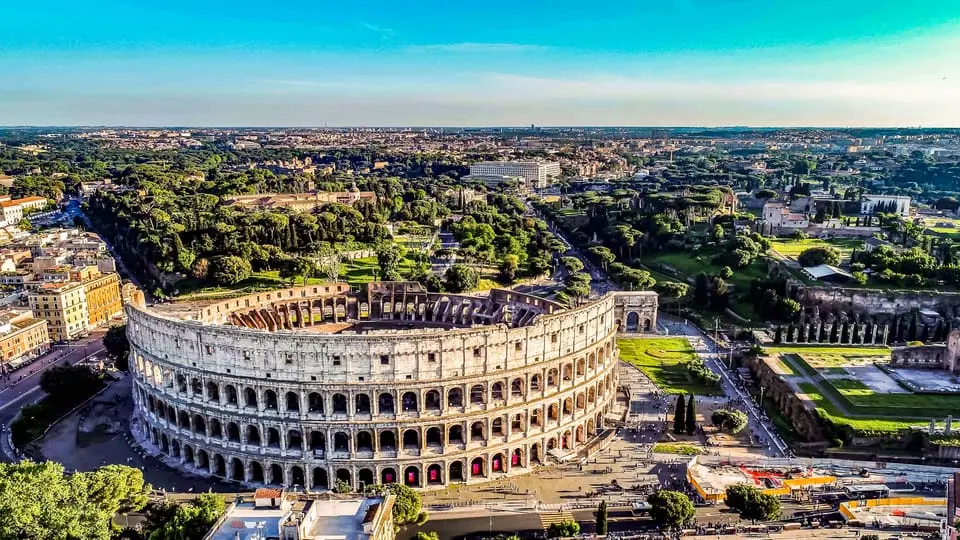
Rome can feel overwhelming on a first visit — three thousand years of history layered into a living, chaotic, beautiful city. This guide cuts through the noise with the essentials: what to see, what to book ahead, how to get around, and the practical tips that make a first trip smooth.
Book these two first
- The Colosseum — timed entry is mandatory; official tickets release 30 days ahead of your visit date and sell out quickly, especially for arena floor and underground access. Sort this before anything else.
- Vatican Museums / Sistine Chapel — walk-up queues can run two hours or more; advance booking cuts that to near zero.
Get these two confirmed first. Everything else in Rome can be more spontaneous.
The must-see sights
If it’s your first time, these are the non-negotiables. All are comfortably doable in three days if you plan by area rather than criss-crossing the city:
- The Colosseum — the world’s greatest ancient amphitheatre, and the undisputed symbol of Rome.
- Roman Forum & Palatine Hill — the heart of the ancient city, included on your Colosseum ticket.
- Vatican Museums & Sistine Chapel — one of the greatest art collections on earth.
- St. Peter’s Basilica — the vast centrepiece of the Vatican, free to enter.
- Pantheon — the best-preserved building of ancient Rome; timed tickets now apply.
- Trevi Fountain — Rome’s most famous fountain; toss a coin to ensure your return. Best visited early morning before crowds build.
- Piazza Navona & Spanish Steps — the elegant squares and streets of the historic centre.
For a ready-made route that groups these by area, see our 3-day Rome itinerary.
Worth adding to your Rome trip
Other Rome experiences to explore
Beyond the Colosseum and Vatican, Rome rewards visitors who look a little further. A Colosseum night tour — after-hours access to the arena floor under atmospheric lighting — is one of the most memorable ways to see the amphitheatre differently. The Borghese Gallery, requiring its own advance booking, holds the finest Bernini sculptures in the world in a frescoed villa north of the centre. For a vivid picture of everyday Roman life, Ostia Antica — Rome’s ancient harbour town, 30 minutes by train and far less visited than the Forum — is a genuinely impressive half-day out. And the Capitoline Museums, perched above the Forum, hold the greatest collection of ancient Roman sculpture on earth.
What to book in advance
Two sights require — or strongly reward — advance booking. Everything else can be more spontaneous, but these two set the shape of your trip:
- The Colosseum: timed entry is mandatory and tickets effectively require reservation. Official tickets release 30 days ahead of your visit date and sell out fast, especially for arena floor and underground access. If official tickets are gone when you look, a guided tour with its own separate ticket allocation is the reliable way in. See our complete Colosseum tickets guide for a breakdown of every ticket type.
- Vatican Museums: book ahead to skip queues that can run two hours or more at the walk-up window.
The anchor of any first Rome trip
Colosseum: Underground and Ancient Rome Tour
The most-reviewed Colosseum underground experience on GetYourGuide — 4.5/5 from 1,100+ verified reviews. Includes the hypogeum, arena floor, Roman Forum and Palatine Hill in one 3-hour itinerary. For a first-time visitor, this is the tour that turns the Colosseum from an impressive exterior into a full picture of how ancient Rome actually worked.
Check AvailabilityThis site is an independent booking guide and may earn a commission if you book through our partner link.
If you’re planning a more straightforward Colosseum visit without the underground descent — or if the underground tour is sold out for your dates — this guided tour is a strong alternative with its own entry allocation and over 35,000 verified reviews:
Reliable guided alternative for first-timers
Rome: Colosseum, Palatine Hill and Roman Forum Guided Tour
A comprehensively reviewed guided tour covering the main Colosseum interior, Roman Forum and Palatine Hill — 4.8/5 from 35,000+ verified reviews, the highest review volume of any Colosseum tour on GetYourGuide. Includes reserved timed entry and a licensed guide. The reliable choice when underground availability is limited for your dates.
Check AvailabilityBest time to visit Rome
- April–May and September–October are ideal: mild weather and thinner crowds than summer peak. The best seasons for a first visit.
- July–August is hot and crowded — start every site visit early, carry water, and make use of the cooler evenings. One unexpected bonus: the Colosseum underground is noticeably cooler than the arena above, a genuine perk in summer.
- Winter (November–March) is quiet and atmospheric with the fewest crowds, though monument hours are shorter — the Colosseum closes at 4:30pm in winter.
For a full breakdown of the best times to visit the Colosseum specifically, including the quietest slots by time of day, see our Colosseum opening hours and best time to visit guide.
Getting around Rome
Rome’s historic centre is compact and walkable — you’ll cover most of the major sights on foot once you’re in the right neighbourhood. Beyond walking:
- Metro Line B stops at “Colosseo,” right beside the Colosseum — the easiest way to arrive for your timed slot on Day 1.
- Metro Line A connects the Vatican area (Ottaviano or Cipro stops).
- Buses and trams fill in the gaps, though traffic can slow them significantly in the centre.
- Taxis are useful late at night; use official white taxis or a ride-share app.
- Comfortable shoes are essential — Rome’s cobblestones are beautiful and relentless on your feet.
Practical tips for a first visit
- Dress code: Churches — including St. Peter’s and the Sistine Chapel — require covered shoulders and knees. Carry a light scarf or layer; street vendors sell wraps near the Vatican if you need one.
- Security at the Colosseum: Everyone passes through metal detectors and bag X-ray screening — no exceptions. Bags larger than about 30×40×15 cm are refused and there is no cloakroom on site, so travel light on that day.
- Water: Rome’s public fountains (nasoni) provide free, clean drinking water throughout the city. Bring a refillable bottle.
- ID for tickets: Colosseum tickets are issued in your name; bring photo ID matching your booking.
- Pickpockets: Stay alert in crowded spots — Termini station, buses, the Colosseum area. Keep valuables in a front zip pocket or crossbody bag.
- Eat like a local: Lunch and dinner run later than in most countries. Avoid restaurants with picture menus right beside major sights — walk a block or two for better food and value.
- Free first Sundays: The Colosseum is free on the first Sunday of each month, but with no advance booking, no arena or underground access, and long queues — a regular timed ticket is almost always the smoother choice.
How long to stay
- 3 days covers the essentials comfortably: ancient Rome on Day 1, Vatican on Day 2, the historic centre on Day 3. See our 3-day Rome itinerary for a day-by-day plan that groups sights to minimise travel time.
- 4–5 days adds breathing room and extras: the Borghese Gallery (requires advance booking), Trastevere, or a day trip to Ostia Antica — Rome’s ancient harbour town, 30 minutes by train and far less crowded than the Forum.
Making the Colosseum easy
The Colosseum is the sight first-timers worry about most — and the one most likely to cause frustration if left too late. Decide early whether you want just the main interior (Standard ticket), the arena floor, or the full underground experience, then book the corresponding ticket or tour as soon as your 30-day window opens. Getting this one booking sorted takes the stress out of the whole trip.
If the terminology around skip-the-line and timed entry is confusing, our guide explains exactly how skip-the-line really works at the Colosseum — including what it does and doesn’t skip.
Frequently asked questions
What should a first-time visitor to Rome see?
The Colosseum, Roman Forum and Palatine Hill, the Vatican Museums and St. Peter’s, the Pantheon, and the Trevi Fountain — all doable in three days. See our 3-day Rome itinerary for a day-by-day plan grouped by area.
What do I need to book in advance for Rome?
The Colosseum (mandatory timed entry — book as early as 30 days ahead) and the Vatican Museums. Both sell out, and both have very long walk-up queues. Everything else in the city can typically be visited without pre-booking.
Is Rome walkable?
Very — the historic centre is compact and most major sights are within walking distance of each other once you’re in the right neighbourhood. Metro Line B reaches the Colosseum, Metro Line A connects the Vatican, and buses fill in the gaps.
When is the best time to visit Rome for the first time?
Spring (April–May) and autumn (September–October) offer the best mix of mild weather and manageable crowds. July and August are the busiest and hottest months; winter is quieter but monument hours are shorter.
How many days do I need in Rome?
Three days covers the essentials; four or five allow a more relaxed pace with room for extras like the Borghese Gallery or a day trip to Ostia Antica.
Start with the highlight
Book your Colosseum ticket or tour before they sell out
The Colosseum is the only part of a first Rome trip that genuinely requires advance planning — and the part most likely to let you down if you leave it too late. Underground and arena floor slots in particular sell out weeks ahead in summer. Book it first, then everything else falls into place around it.
€18 (Standard official ticket, plus a small booking fee) · From ~$57 (guided underground tour)
Check AvailabilityThis site is an independent booking guide and may earn a commission if you book through our partner link.
Related reading:
- All Colosseum Underground Tours: Compare 19 Guided Tours
- What to See in Rome: The Perfect 3-Day Itinerary (2026)
- Colosseum Tickets 2026: Every Ticket Type Explained
- Colosseum Opening Hours, Last Entry & The Best Time to Visit
- Skip-the-Line Colosseum: How It Really Works (2026)
- Colosseum Underground Tour: Explore the Hypogeum & Arena Floor (2026)