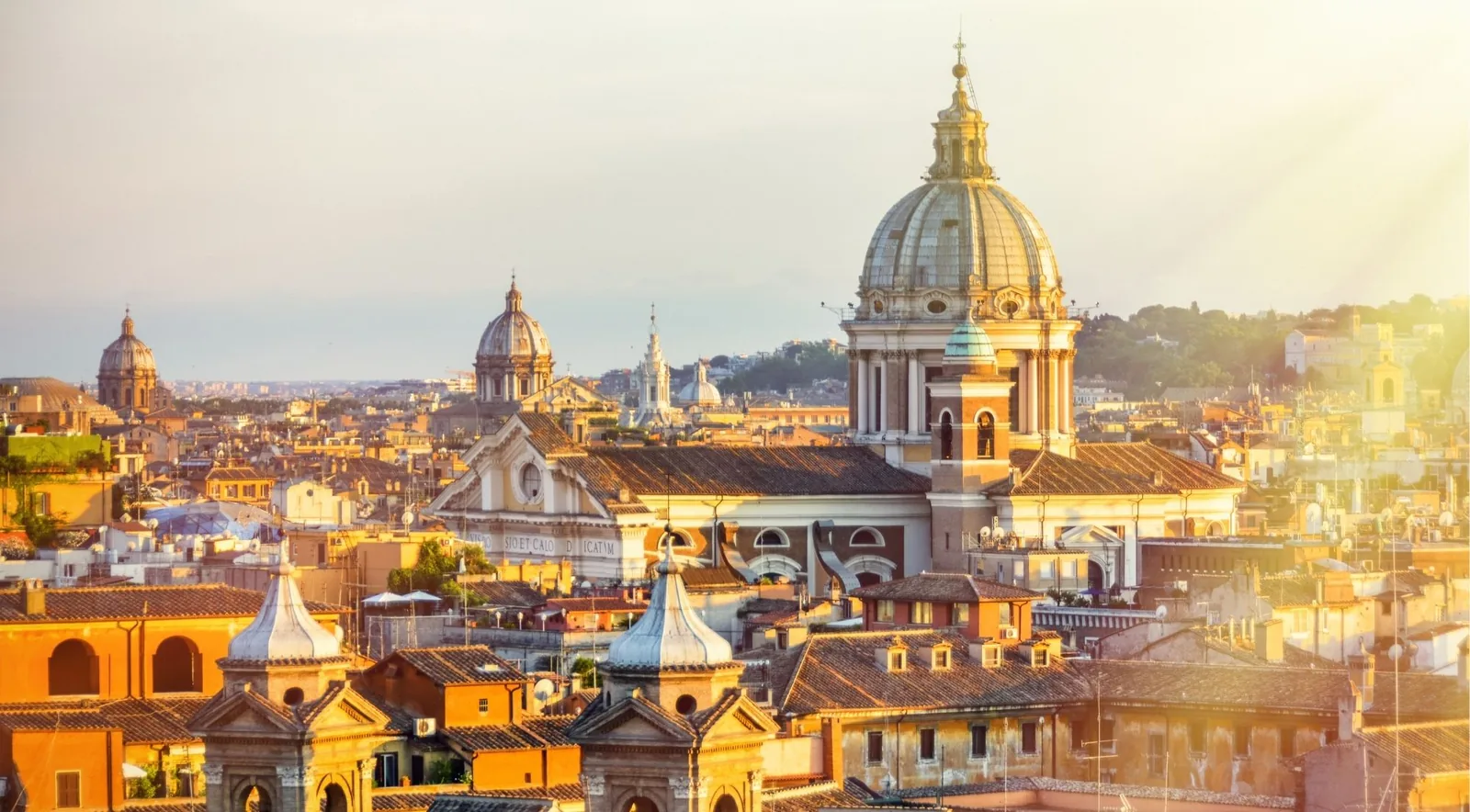
Three days is enough to see the essential Rome — ancient monuments, Vatican masterpieces, and the fountain-and-piazza magic of the historic centre — without exhausting yourself. This itinerary groups sights by area so you spend your time exploring, not criss-crossing the city. Rome is wonderfully walkable once you’re in the right neighbourhood, so most of this is done on foot.
Two things to book first
- The Colosseum — timed entry, mandatory reservation. Official tickets release 30 days ahead of your visit date and sell out fast. Book this before anything else.
- Vatican Museums / Sistine Chapel — also best booked ahead to avoid enormous queues. Walk-up waits can exceed two hours.
Sort these two first. Everything else in this itinerary can be visited without pre-booking.
Day 1: Ancient Rome
Start where Rome began, with its greatest monuments clustered conveniently together in the same archaeological park. This day centres on the Colosseum, and everything else follows from it.
- Colosseum (2–3 hours). Book a timed slot. For the fullest experience, choose a ticket or tour that includes the arena floor and the underground hypogeum — the areas a standard ticket skips and the ones that turn the Colosseum from an impressive exterior into a working picture of the ancient games.
- Roman Forum & Palatine Hill (2–3 hours). Included on your Colosseum ticket, right beside it. Walk the Via Sacra, find the Senate House, and climb the Palatine for imperial palaces and the best views in the city.
- Arch of Constantine, just outside the Colosseum — a quick stop on the way in or out.
- Evening: wander into Monti, the neighbourhood immediately north of the Forum, or cross the river to Trastevere for dinner.
Allow a full day. The Colosseum, Forum and Palatine together are a lot of ground, a lot of history, and a lot of standing. Don’t rush it.
Experiences worth adding to your Rome trip
Other Rome experiences to explore
Beyond the three-day framework above, Rome rewards visitors who look a little further. The Borghese Gallery — Bernini sculpture in a frescoed villa — requires its own advance booking and is one of the most beautiful spaces in the city. Ostia Antica, Rome’s ancient harbour town, is a 30-minute train ride and far less visited than the Forum; it gives a vivid picture of how ordinary Romans lived. The Capitoline Museums sit directly above the Forum and hold the greatest collection of ancient Roman sculpture in the world. And for a Colosseum visit with a completely different atmosphere, a Colosseum night tour after dark — small group, atmospheric lighting, the arena floor to yourself — is hard to match.
The Day 1 anchor: Colosseum underground & Ancient Rome
Colosseum: Underground and Ancient Rome Tour
The most-reviewed Colosseum underground experience on GetYourGuide — 4.5/5 from 1,100+ verified reviews. Guided access to the hypogeum, arena floor, Roman Forum, and Palatine Hill in one 3-hour itinerary. This is the one tour that covers everything Day 1 needs in a single booking: the Colosseum underground, ancient Rome, and both archaeological sites.
Check AvailabilityThis site is an independent booking guide and may earn a commission if you book through our partner link.
If you prefer a smaller, more exclusive Day 1 option — or if the tour above is sold out for your dates — this alternative covers the same ground with a capped group size and its own ticket allocation:
Small-group Day 1 alternative
Rome: Roman Forum and Colosseum Underground Exclusive Tour
A smaller-group guided tour combining the Roman Forum and the Colosseum underground — 4.7/5 from 1,500+ reviews. Reserved timed entry, expert licensed guide, and its own ticket allocation so you’re not dependent on official underground availability on your travel date.
Check AvailabilityDay 2: Vatican City
Cross into the world’s smallest country for one of its greatest art collections. Put the whole day here — you’ll need it.
- Vatican Museums (3–4 hours). Vast and genuinely overwhelming. Pace yourself, pick a route through the Galleries of Maps and the Raphael Rooms, and keep some energy for the Sistine Chapel. Book ahead — walk-up queues can be very long.
- Sistine Chapel, the climax of the museum route, with Michelangelo’s ceiling and the Last Judgement. Photography rules are strictly enforced by guards.
- St. Peter’s Basilica, the enormous centrepiece of the Vatican. Entry is free. Climbing the dome (the cupola) adds a fee and a lot of stairs, but the view over Rome is worth it if you have the energy.
- Castel Sant’Angelo, a short walk along the Tiber from the Vatican, makes a good afternoon addition — the view from the top terrace over the Tiber bend is one of Rome’s best.
- Evening: stroll back along the Tiber, or find a rooftop bar in Prati for sunset with the dome in view.
Dress code. Shoulders and knees must be covered at St. Peter’s Basilica and inside the Sistine Chapel — the dress code is enforced at the door. Scarves and wraps are available from street vendors nearby if you forget.
Day 3: The historic centre
Save Rome’s walkable, fountain-scattered historic heart for last. This day is the most relaxed — perfect timing for when your legs are tired but your appetite for the city hasn’t gone.
- Pantheon — the best-preserved building from ancient Rome and one of the most astonishing spaces you can walk into. The oculus at the top has been open to the sky for 2,000 years. Timed tickets now apply; check before going. A short detour to see Vicus Caprarius (the “City of Water,” a Roman archaeological site a few metres below street level just off the Trevi Fountain) is worth it if you’re curious about what lies under modern Rome.
- Trevi Fountain — crowd the best time of day or head there first thing in the morning. Toss a coin and continue.
- Piazza Navona — Baroque fountains and street life in a long oval piazza built on the ancient stadium of Domitian. Bernini’s Fountain of the Four Rivers is at its centre.
- Spanish Steps — a classic Rome viewpoint. The surrounding streets (Via Condotti, Via Frattina) are Rome’s main luxury shopping strip.
- Campo de’ Fiori — a lively market square in the mornings, a restaurant and bar scene in the evenings. Good for lunch.
All five are within comfortable walking distance of each other — this day is built for wandering, not rushing.
How the Colosseum fits your trip
The Colosseum is the anchor of Day 1, so build your other plans around its timed slot. A morning Colosseum slot leaves the afternoon for the Forum and Palatine; a late-afternoon slot pairs well with an evening in Monti. Book the Colosseum first, then everything else falls into place around it.
For a full breakdown of Colosseum ticket types, what each includes, and how the booking system works, see our 2026 Colosseum tickets guide. For specific advice on the Roman Forum and Palatine Hill — what to see, best entrances, SUPER sites — see our Forum & Palatine visitor guide.
Best time to visit Rome
- April–May and September–October: mild weather, manageable crowds — the ideal windows for first-time visitors.
- July–August: hottest and busiest. Start every site visit early and carry water. The underground hypogeum is noticeably cooler than the arena above — an unexpected perk in summer.
- November–March: fewest crowds and some beautiful light, but shorter monument hours and the occasional rain. The Colosseum closes at 4:30pm in winter.
Getting around
Rome’s historic centre is compact and best explored on foot. Metro Line B stops right at “Colosseo” — useful for the morning of your Colosseum visit. Metro Line A connects the Vatican area (Ottaviano or Cipro stops). Taxis and rideshares fill the gaps; buses are slow in traffic. Wear comfortable shoes: Rome’s cobblestones are beautiful and hard on your feet.
Frequently asked questions
Is 3 days enough for Rome?
Yes, for the essentials — ancient Rome, the Vatican, and the historic centre each get a full day. A fourth day lets you slow down, revisit favourites, or add the Borghese Gallery or Ostia Antica.
What should I book in advance for Rome?
The Colosseum (mandatory timed entry — book as early as 30 days ahead) and the Vatican Museums. Both sell out and both have very long walk-up queues. Everything else in this itinerary can be done without pre-booking. See our Colosseum tickets guide for how to book.
What’s the best area to base yourself in Rome?
The historic centre, Monti or Trastevere. All three put you within easy walking or short transit distance of the main sights — the centre sits near the Pantheon and Piazza Navona, and Monti is walking distance from the Colosseum and Forum. Avoid hotels near Termini unless budget is the priority — the station area is far from most of what you’ll want to see.
How much time should I spend at the Colosseum?
Around 2–3 hours for the Colosseum itself, plus another 2–3 hours if you’re visiting the Roman Forum and Palatine Hill on the same ticket. Allow a full day for ancient Rome as a whole. See our best time to visit guide for how to plan your Colosseum slot.
Can I do the Colosseum and Vatican on the same day?
Not recommended if you have a choice. They are on opposite sides of the city, each deserves at least 3–4 hours, and combining them makes for a demanding 10–12 hour day. This itinerary puts each on its own day so both get the time they deserve. If your schedule forces a one-day combination, our detailed guide to Vatican and Colosseum in one day covers exactly how to make it work, including the right sequence, transfer logistics, and why a combined guided tour is the only practical vehicle for pulling it off.
Make the Colosseum the highlight of Day 1
Book your Colosseum ticket or tour before they sell out
The Colosseum is the only part of this itinerary that requires advance booking — and it’s the part most likely to let you down if you leave it too late. Underground and arena floor slots in particular sell out weeks ahead in summer. Book it first, then plan around it.
€18 (Standard official ticket, plus a small booking fee) · From ~$57 (guided underground tour)
Check AvailabilityThis site is an independent booking guide and may earn a commission if you book through our partner link.
Related reading:
- All Colosseum Underground Tours: Compare 19 Guided Tours
- Colosseum Tickets 2026: Every Ticket Type Explained
- Roman Forum & Palatine Hill: Complete Visitor Guide (2026)
- Colosseum Opening Hours, Last Entry & The Best Time to Visit
- Colosseum Underground Tour: Explore the Hypogeum & Arena Floor (2026)
- Inside the Colosseum: History, Gladiators & What Remains Today
- Rome for First-Time Visitors: The Essential Travel Guide (2026)
- Skip-the-Line Colosseum: How It Really Works (2026)